Why Do We Recommend Diagnostics?
Diagnostics such as bloodwork and radiographs (X-rays) help our veterinary team look beyond what we can see during a physical exam. They can help detect underlying health concerns, identify the cause of symptoms, and give us a clearer picture of your pet’s overall health. By using these tools, we can make more informed diagnoses and create the most appropriate treatment plan for your pet.
Early detection can make a big difference in your pet’s health and well-being.
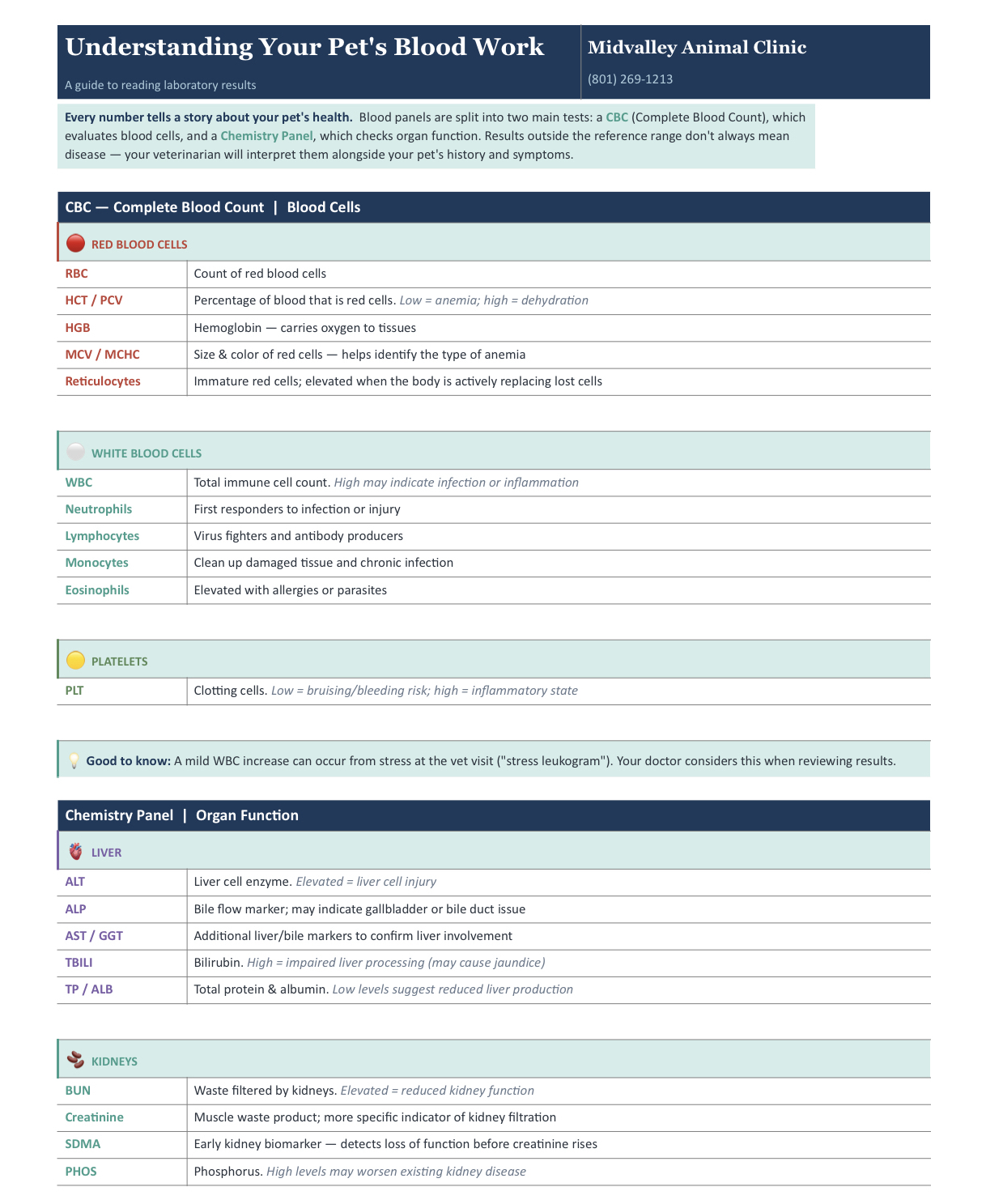
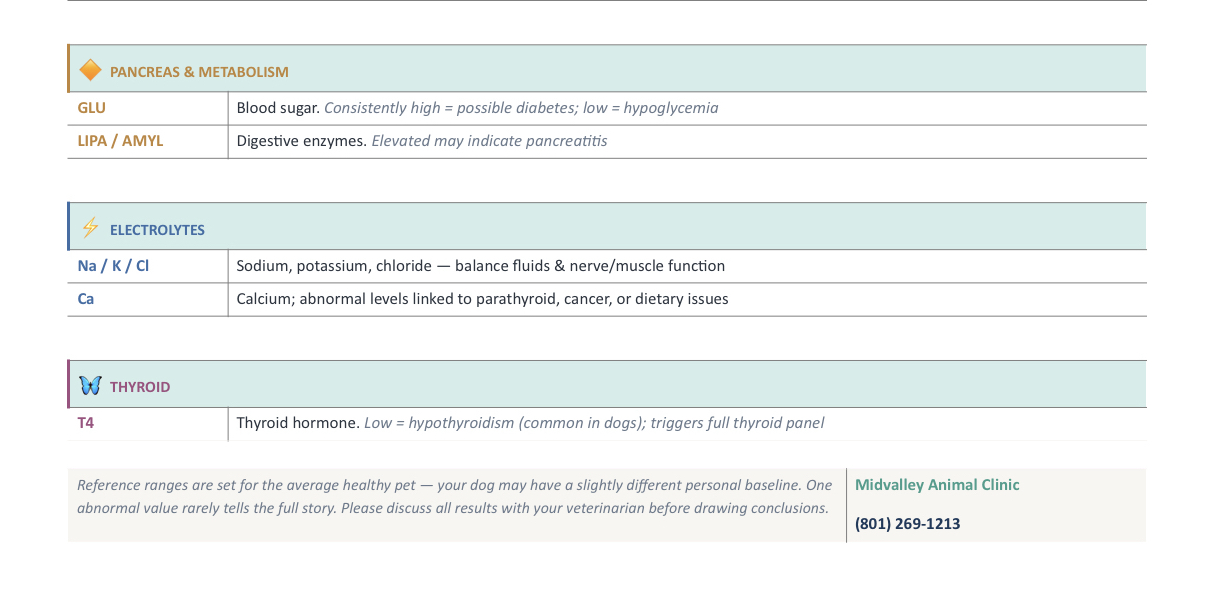
You can click on any of the following topics to learn more:
Keeping Your Pet Healthy Starts from the Inside Out. At Midvalley Animal Clinic, we believe that proactive preventative care is the best care. One of the most valuable tools we use is routine bloodwork, which provides vital information about your pet’s internal health, even when they seem perfectly fine on the outside.
Understanding your Dog's Liver Values:
Your dog’s recent bloodwork shows elevations in two primary liver enzymes. While these results can be concerning, they provide a roadmap for the next steps in your pet's care.
This handout provides an overview of feline hyperthyroidism, a common condition in middle-aged and senior cats caused by an overproduction of thyroid hormone.
Diabetes mellitus is a disease of the pancreas. This is a small but vital organ that is located near the stomach. It has two significant populations of cells. One group of cells produces the enzymes necessary for proper digestion. The other group, called beta-cells, produces the hormone called insulin. Simply put, diabetes mellitus is a failure of the pancreas to regulate blood sugar.